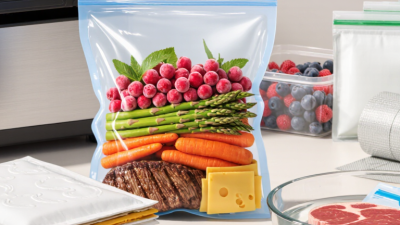
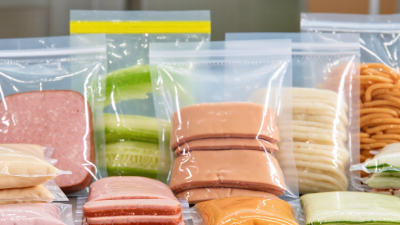
What Are the Best Vacuum Seal Bags for Food Storage?
Choosing the best Vaccuum Seal Bags starts with how you plan to store food: in a freezer, refrigerator, pantry, or sous vide bath. A bag that seals neatly on the counter may split around frozen chicken or fail in a chamber-style machine. Material thickness, seal strength, texture, and appliance compatibility matter more than glossy packaging claims. Small details count. A textured roll can help a suction sealer remove air, while pre-cut bags save time when portioning berries or soup.
The market is growing, but popularity alone does not prove a bag performs well. Grand View Research’s Vacuum Packaging Market report estimated the global market at about $29.6 billion in 2023 and projected continued growth through 2030. That figure describes an industry, not a guarantee of food safety or bag quality. For practical guidance, the USDA Food Safety and Inspection Service explains that vacuum packaging does not make perishable food shelf-stable; refrigeration or freezing is still necessary. Keep that distinction in mind when comparing products. It is easy to confuse “less air” with “safe at room temperature.”
This guide will compare bag types, thickness, seal reliability, and everyday usability, while noting where manufacturer claims need closer scrutiny. Look for clear instructions on freezer use, heating limits, and machine compatibility. Some labels are vague. That deserves a second look. The best choice is the one that fits your sealer, protects the food you actually store, and makes safe handling straightforward.
How Vacuum Seal Bags Preserve Food
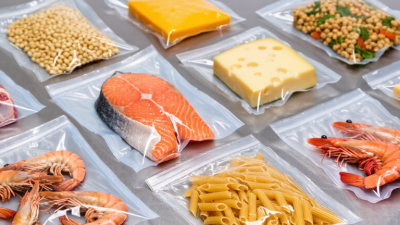
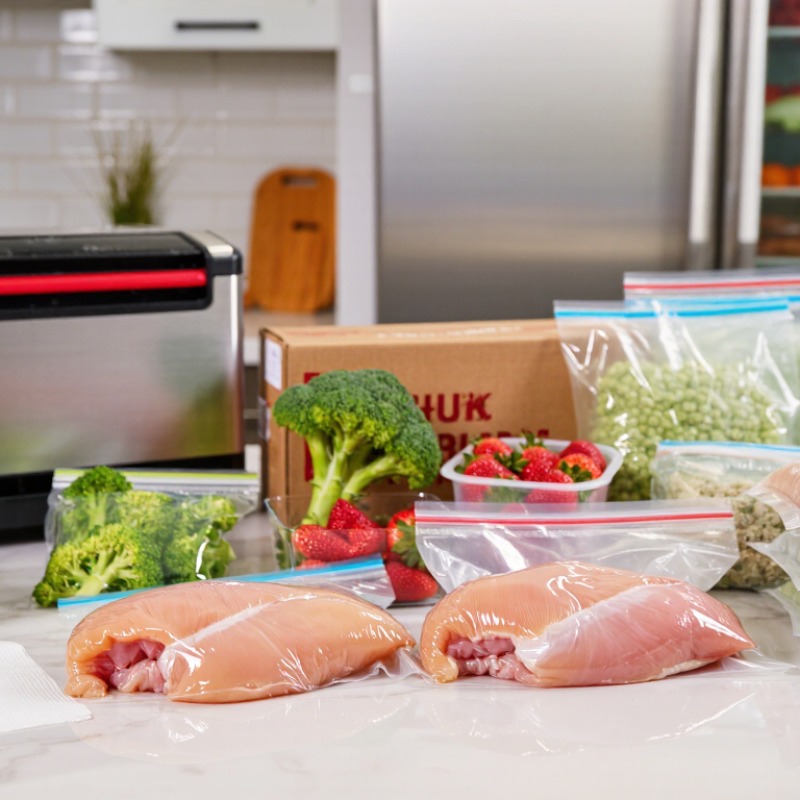
Vacuum seal bags preserve food by removing much of the air around it. With less oxygen, oxidation slows, which can help protect flavor, color, and texture. The change is easy to see with sliced apples: exposed pieces brown quickly, while sealed ones usually stay fresher-looking longer. It is not magic. Vacuum sealing does not sterilize food or stop every kind of spoilage, so perishable ingredients still need proper refrigeration or freezing.
A reliable seal matters as much as the bag itself. Before sealing, I pat damp ingredients dry and leave a little space above the food; crumbs or oil near the opening can interfere with the seal. For soups and marinades, I freeze the liquid until firm first. Less mess. In the freezer, a close-fitting bag can reduce exposure to air and help limit freezer burn, though food quality still changes over time. I also label each bag with its contents and date, because frozen portions can become oddly hard to identify. One detail I still have to watch: sharp edges, such as bones, may puncture the plastic. A second layer can help, but checking the bag after sealing is the safer habit.
Common Materials, Textures, and Bag Types
Vacuum seal bags commonly use layered plastic, often combining polyethylene with nylon. Polyethylene helps limit moisture loss, while nylon can add strength and resist punctures. Exact performance varies by construction, so check the bag’s stated freezer and food-storage suitability. A thicker bag may feel reassuring, but thickness alone does not guarantee a better seal. The sealing edge matters, too.
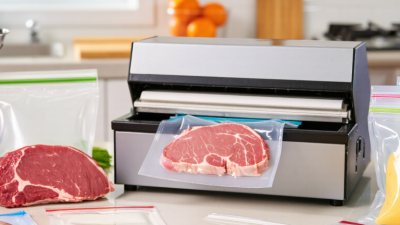
Texture matters. Embossed bags have small channels that help external vacuum sealers remove air. Smooth bags are generally designed for chamber vacuum sealers, which pull air from the chamber rather than through the bag surface. Not every bag fits. Choosing the wrong texture can leave air inside or prevent sealing. The confusing part is that some bags look similar, even when their intended machines differ.
Tips: Match the bag type to your sealer’s instructions. Leave a clean, flat section at the opening; crumbs or oil can interfere with the seal. For moist foods, chill or partially freeze them before sealing to reduce liquid being drawn toward the machine. Check each sealed edge for gaps. If one looks uneven, reseal with a fresh edge rather than trusting it for long storage. Vacuum sealing helps, but it does not replace safe chilling or freezing.
Key Features for Choosing Vacuum Seal Bags
A good vacuum seal bag should match the food and the sealing method. Check that its material is food-grade and designed for vacuum sealing. The bag should feel sturdy, not flimsy, and its seams should stay flat during sealing. Small leaks can let air back in, even when the seal looks neat.
Texture matters. Embossed channels can help some countertop sealers remove air, while smooth bags may suit chamber-style machines. Check your sealer’s instructions before buying a roll or a large pack. Bag width also matters: leave enough space above the food for a clean seal. Too little room makes sealing awkward. Too much wastes material.
Consider how you plan to store and prepare the food. For freezer use, choose bags rated for freezing; thicker material may help reduce punctures from bones or hard edges. If you plan to heat food in the bag, confirm that the packaging is specifically rated for that temperature and method. Reusable bags can cut down on waste, but they need careful washing and thorough drying. I sometimes misjudge portion size and end up with a bag that is much larger than necessary. It is a small annoyance, but choosing a few sizes can make daily storage easier.
Matching Bag Types to Foods and Storage Conditions
The best vacuum seal bag depends on the food and the sealer, not just the storage goal. External sealers usually need textured bags that let air move toward the machine. Chamber sealers often work with smooth bags. Check the sealer’s instructions before buying; a bag that does not seal properly wastes food and time. Fit matters.
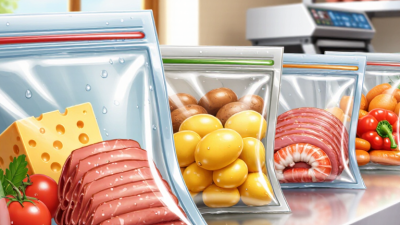
For moist foods such as meat or fish, choose sturdy bags rated for freezer use, and leave space above the food for a clean seal. If liquid is likely to reach the sealing strip, chill or partially freeze the food first. Delicate berries and soft bread can be frozen on a tray before bagging. Otherwise, pressure may turn them into a sticky mess. Dry foods, including rice or crackers, need less heavy material, but a puncture-resistant bag still helps during storage.
Match the bag to the conditions. For long freezer storage, use thick bags and label each one with the food and date; frost can make identical packages hard to tell apart. In the refrigerator, vacuum sealing does not make perishable food safe to leave unrefrigerated, so keep it cold and follow reliable food-handling guidance. I sometimes focus too much on bag thickness; a good seal and suitable storage temperature matter just as much.
Safe Sealing, Storage, and Reuse Practices
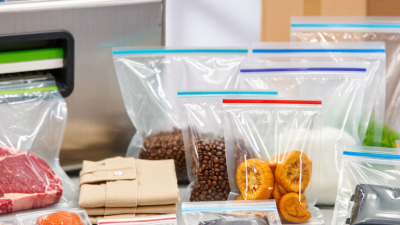
Choose food-contact bags made for vacuum sealing, and check that the material suits your sealer and intended use. Keep the sealing strip clean and dry; crumbs or oil can leave tiny channels where air returns. Leave the recommended headspace, then inspect the edge for wrinkles or gaps. Clean edges matter. Label each pouch with its contents and date before it disappears beneath frozen peas. Vacuum sealing is not canning.
Move perishable food into the refrigerator or freezer promptly; removing air does not make it shelf-stable or replace refrigeration. Freeze portions flat, and thaw them in the refrigerator or by another safe method rather than on the counter. Reuse only bags labeled reusable, washing them thoroughly and drying them completely between uses. Do not reuse a bag that held raw meat, fish, or oily food; small seams are hard to clean well. Check the seal. A pouch can look perfectly closed and still leak, so checking it later is worth a few seconds.
What Are the Best Vacuum Seal Bags for Food Storage?
Choose food-grade bags designed for vacuum sealing. The chart shows USDA freezer-storage guidance for best quality; the bars mark the upper end of each recommended range.
Safe sealing and reuse: Keep perishable foods cold and follow safe handling practices—vacuum sealing does not make food safe at room temperature or extend refrigerator storage limits. These freezer periods are for best quality when food stays continuously frozen at 0°F (−18°C); frozen food kept continuously at that temperature remains safe indefinitely. Reuse a bag only if it held food that was not raw meat, fish, or eggs, and wash it thoroughly; discard bags that are torn or difficult to clean.
Source: USDA Cold Food Storage Chart. Freezer times are quality recommendations.