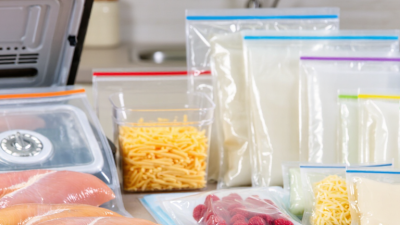
Choosing the top Vacuum Seal Bags for global buyers requires more than comparing prices. A reliable bag must protect food, clothing, documents, or equipment during handling, storage, and long-distance shipping. Buyers should examine film thickness, oxygen resistance, puncture strength, seal consistency, and compatibility with their vacuum machine. Bag performance can change sharply in humid warehouses or freezing transport.
Small details matter.
Dr. Bruce Harte, a respected food-packaging scholar, states, “Packaging must protect the product, preserve quality, and communicate clearly throughout distribution.” This principle guides our review of Vaccuum Seal Bags. We will compare multilayer materials, embossed channels, smooth commercial rolls, reusable designs, and custom sizes. We will also consider food-contact documentation, supplier traceability, testing records, and practical sustainability claims. “Eco-friendly” is not enough.
A strong bag should remain sealed after pressure, folding, and repeated movement. Its transparent surface should help workers identify contents quickly. For seafood, coffee, meat, and other sensitive products, barrier performance deserves special attention. For garments or travel items, durability and compact storage may matter more than maximum oxygen protection. Global buyers should also confirm dimensions, carton quantities, sample availability, and after-sales support before placing large orders.
No product is perfect.
Some bags advertise impressive thickness but use weak seals. Others perform well in testing yet feel inconvenient during daily packing. This guide recognizes that gap. Its recommendations balance laboratory specifications with handling realities, supplier reliability, and responsible purchasing decisions across international markets.
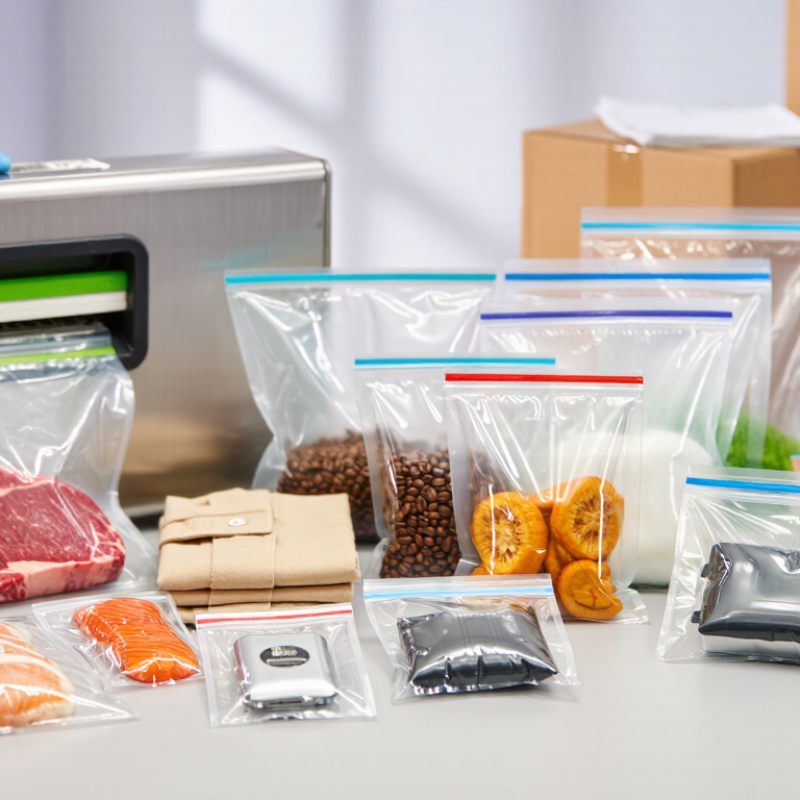
Vacuum seal bags are flexible storage pouches made from layered plastic films. Their inner layer softens under heat and forms an airtight seal. Outer layers add strength, puncture resistance, and protection from moisture or oxygen. Performance depends on film thickness, barrier quality, and seal design. Thin bags may cost less, but sharp bones or rough edges can damage them. That matters.
During use, a pump removes air through a valve or open mouth. Atmospheric pressure then presses the film tightly around the contents. Heat sealing closes the opening and prevents most air from returning. This process can reduce oxidation, freezer burn, odors, and moisture loss. It does not sterilize food. Refrigeration or freezing may still be necessary. Vacuum pressure cannot replace careful cleaning, cooling, and date labeling.
For global buyers, compare material specifications instead of trusting attractive claims. Check whether the bag suits cooking, freezing, boiling, or dry storage. Confirm dimensions after sealing, because usable space shrinks around bulky items. Look for consistent seams and test a sample before ordering large quantities. A simple water-leak test can reveal weak seals. I would not treat every “airtight” claim as proven. Some bags lose suction when folded, overfilled, or exposed to sharp contents. Better results come from leaving sealing space, smoothing the mouth, and inspecting each seal by hand.
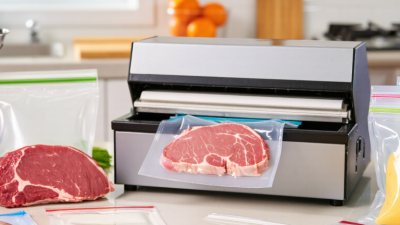
Material choice controls barrier performance, puncture resistance, and end-of-life options. Polyethylene usually forms the reliable inner sealing layer. Nylon adds strength when bones, shells, or sharp edges create pressure. EVOH can improve oxygen protection, but humidity may reduce its barrier performance.
Smithers’ 2024 flexible packaging report projects continued growth through 2029, driven partly by food protection and material efficiency. The trade-off is real. More layers can mean better protection, but harder recycling.
Size should follow the product, not the carton. Measure length, width, and height, then allow space for the seal area. A small bag may waste less material, yet it can crush delicate food. Large bags protect shape better, but require stronger vacuum control.
Flat three-side-seal bags suit portions and compact goods.
Gusseted bags fit bulky products.
Stand-up formats offer shelf visibility, although they are not always ideal for deep vacuuming.
Closure details matter during export. Heat seals provide strong, tamper-evident closure when sealing temperature and dwell time are controlled. Zippers improve repeated access, but the zipper zone can limit vacuum strength.
According to Grand View Research, the global vacuum packaging market was valued at about USD 29.6 billion in 2023, showing broad demand for dependable formats.
Tips:
Test filled samples after vibration, compression, and cold storage. Check seal width, leak rates, and odor transfer.
I would not trust a specification sheet alone. Supplier samples sometimes perform differently in actual transit.
Top Vacuum Seal Bags for Global Buyers?
How to Compare Bags for Food, Storage, and Commercial Use
Choosing vacuum seal bags for global buyers starts with the intended job, not the lowest quotation. Food bags need reliable seals, clean materials, and resistance to freezer moisture. For dry storage, puncture resistance and stable dimensions may matter more than maximum air removal. Commercial users should inspect roll width, production consistency, carton strength, and lead-time reliability. Small details become expensive.
Compare the film structure, usually a food-contact polymer blend, and ask for its thickness in microns. Thicker film can resist sharp edges, but it may reduce packing flexibility and raise shipping costs. Check seal strength after freezing, warm handling, and repeated opening tests. I prefer samples filled with actual products, such as bones, coffee grounds, or damp vegetables. That test reveals weaknesses faster than a polished specification sheet. Do not judge clarity alone. Clear film looks professional, yet light-sensitive foods may need stronger protection.
Reliable suppliers should provide batch records, material declarations, dimensional tolerances, and inspection results. For international purchasing, request applicable food-contact documentation for each destination market. Confirm packaging hygiene, labeling accuracy, pallet protection, and shipping paperwork before volume production. Ask whether the bag fits your sealer without excessive trimming or wrinkling. I once underestimated bag width and lost valuable shelf space. That mistake was avoidable. Pricing still matters, but cost per usable bag is more meaningful than price per carton.
Comparison of common vacuum-bag formats using typical market specifications. Actual performance depends on film formulation, thickness, sealing equipment, product shape, storage conditions, and applicable food-contact regulations.
| Bag Type | Recommended Applications | Typical Film Structure | Typical Thickness | Machine Compatibility | Temperature Guidance | Barrier and Strength | Key Advantages | Main Limitations | Buyer Checkpoints |
|---|---|---|---|---|---|---|---|---|---|
| Embossed External-Suction Bags | Household food storage, meat, seafood, vegetables, and small retail portions | Textured nylon/polyethylene, commonly PA/PE | 70–120 micrometres (2.8–4.7 mil) |
External suction vacuum sealers with a textured channel side | Freezer use commonly down to approximately −40°C; heating limits must be confirmed for the specific structure | Medium barrier Good flexibility; texture improves air evacuation |
Widely compatible, easy to use, available as bags or rolls, suitable for irregular household portions | Usually unsuitable for chamber machines; textured surface can reduce print clarity and stacking efficiency | Confirm texture design, seal width, roll dimensions, food-contact documentation, and puncture resistance |
| Smooth Chamber Bags | Restaurants, food processors, retail packing, and high-volume commercial operations | Smooth PA/PE or multilayer nylon/polyethylene | 70–150 micrometres (2.8–5.9 mil) |
Chamber vacuum machines; some models also support gas flushing | Freezer-compatible grades are common; hot-water or sous-vide use requires a structure specifically rated for heating | Medium to high barrier Consistent seal area and good mechanical strength |
Efficient evacuation, clean appearance, strong sealing, and good suitability for automated workflows | Requires chamber equipment; heavier gauges increase material and shipping costs | Check chamber size, bag dimensions, seal temperature, seal time, leak rate, and machine cycle speed |
| High-Barrier Multilayer Bags | Longer ambient or chilled distribution, processed foods, cheese, cured products, and sensitive dry goods | PA/EVOH/PE or other multilayer barrier constructions | 90–150 micrometres (3.5–5.9 mil) |
Primarily chamber vacuum machines; compatibility depends on sealant layer and equipment settings | Temperature range varies substantially; do not assume suitability for boiling, retort, or sous-vide applications | High barrier Improved resistance to oxygen and aroma transmission compared with standard PA/PE |
Helps protect oxidation-sensitive products and retain aroma when correctly specified | Higher cost; barrier performance may decrease if the film is sharply creased, punctured, or exposed to unsuitable heat | Request oxygen and water-vapour transmission data tested at stated conditions, plus shelf-life validation for the product |
| Heavy-Duty Puncture-Resistant Bags | Bone-in meat, frozen seafood, industrial ingredients, hardware, and products with sharp edges | Reinforced PA/PE or thick multilayer polyethylene-based film | 150–200 micrometres (5.9–7.9 mil) |
Chamber machines or appropriately sized industrial vacuum systems | Often suitable for freezing; heat performance depends on the sealing and barrier layers | High mechanical strength Better puncture and tear resistance than standard gauges |
Reduces leakage caused by corners, bones, or rough product surfaces | Uses more material, needs stronger sealing parameters, and may reduce machine throughput | Review dart-drop or puncture data, seal strength, corner protection, and carton compression performance |
| Boilable or Sous-Vide Bags | Controlled-temperature cooking, meal preparation, foodservice, and chilled ready-to-eat products | Heat-rated PA/PE, PA/PP, or another declared high-temperature multilayer structure | 90–150 micrometres (3.5–5.9 mil) |
Usually chamber vacuum machines; some products are designed for external suction machines | Only use within the supplier's declared temperature and time limits; many cooking applications operate below 100°C | Heat and seal stability Designed to maintain seal integrity during controlled heating |
Supports portion control, consistent cooking, and reduced exposure to water during heating | Not automatically suitable for boiling, pressure cooking, microwave use, or retort processing | Verify maximum temperature, exposure time, migration compliance, seal strength after heating, and instructions for use |
| Vacuum Bag Rolls | Mixed-size household use, catering, small businesses, and operations requiring custom bag lengths | Embossed PA/PE for external suction or smooth multilayer film for chamber systems | 70–150 micrometres (2.8–5.9 mil) |
Must match the roll type to the machine: external suction or chamber format | Follow the film's declared freezer and heating limits | Depends on film type Performance is generally comparable to the corresponding pre-made bag |
Reduces unused bag length and supports a broad range of product sizes | Requires cutting and a first seal; incorrect alignment can cause leaks or uneven seals | Compare roll width, length, core size, texture coverage, sealability, packaging waste, and labor time |
| Reusable Zipper Vacuum Bags | Short-term household storage, travel, clothing, bedding, and selected non-sharp food products | Flexible polyethylene or multilayer plastic with an integrated zipper and valve | Typically 80–120 micrometres (3.1–4.7 mil) |
Hand pumps or compatible electric pumps; usually not intended for commercial chamber sealing | Temperature limits are product-specific; many are intended for storage rather than cooking | Low to medium barrier Convenient but more dependent on zipper and valve integrity |
Can reduce single-use packaging for suitable applications and is convenient for travel or household organization | Shorter service life, lower puncture resistance, and a higher risk of leakage after repeated use | Check cleaning instructions, valve durability, zipper cycle life, food-contact status, and restrictions on raw meat or hot food |
| Opaque or Light-Blocking Bags | Light-sensitive foods, coffee-related products, dried ingredients, supplements, and selected pharmaceutical packaging | Pigmented or metallized multilayer film with a sealant layer | 80–150 micrometres (3.1–5.9 mil) |
Chamber machines or other equipment specified for the bag construction | Freezer and heating limits vary; metallized structures should not be assumed microwave-safe | Light protection Barrier depends on whether the film is pigmented, metallized, or foil-based |
Helps reduce light exposure and can improve product presentation and handling privacy | Visual inspection of the product is limited; some structures are less flexible or harder to recycle | Confirm light-transmission data, oxygen and moisture barrier, sealant compatibility, and recycling requirements |
For global buyers, vacuum seal bags should be judged by safety and fit, not appearance alone. The FAO’s 2019 State of Food and Agriculture estimates that 14% of food is lost between harvest and retail. Proper sealing may reduce exposure to air and moisture, but it cannot replace refrigeration or safe handling. Choose bags with documented food-contact compliance for the destination market. Ask for migration test results, seal-strength data, and clear material specifications.
Compatibility is often overlooked. A chamber machine usually requires smooth bags, while external suction machines commonly need embossed channels. Check the bag’s width, thickness, temperature range, and sealing layer before ordering large quantities. A bag can look strong and still split around sharp bones or frozen edges. I have found that testing a small batch under real conditions reveals more than a product photograph. The first trial may expose weak seals.
Shipping adds another risk. UNEP’s 2023 Turning off the Tap report states that global plastic pollution could be reduced by 80% by 2040 through existing measures, including better reuse and design. Buyers should confirm recyclable-material claims instead of trusting vague labels. International parcels may face compression, heat, humidity, and long warehouse delays. Use dry cartons, avoid overpacking, and request packaging dimensions before purchase. Customs descriptions should identify the product accurately and omit unsupported environmental claims. Keep documents ready.
Top Vacuum Seal Bags for Global Buyers?
How Global Buyers Can Select Reliable Vacuum Seal Bags
When buyers source vacuum seal bags across borders, appearance should not lead the decision. Reliability begins with material, thickness, and seal performance. Ask for the exact polymer structure, measured gauge, and food-contact documentation. A clear bag may look strong yet split around sharp edges. That detail matters.
Test samples under real conditions. Place sliced meat, dry grains, or clothing inside, depending on the intended use. Remove air, then store samples for several days. Check for slow leaks, cloudy film, brittle corners, and weak seals. Run a second test with ordinary household heat levels. Factory equipment can hide weaknesses that appear in smaller operations.
Packaging details also affect international purchasing. Confirm bag dimensions, carton counts, pallet limits, and moisture protection. Request production samples made from the same specification as the final order. Keep written records of test results and agreed tolerances. No bag is perfect. Buyers sometimes focus on low unit prices and overlook inconsistent widths. That mistake can create waste, delays, and repacking costs. Reliable suppliers should answer technical questions clearly, provide traceable documents, and accept reasonable quality checks before shipment. Import rules may differ, so verify current requirements with qualified authorities.