Leave Your Message

How to Choose the Best Vacuum Freezer Bags from China?

Choosing the right Vacuum Freezer Bags from China requires more than comparing prices. A bag may look thick, yet tear around a sharp bone or split after repeated freezing. Real performance depends on film structure, sealing strength, oxygen resistance, and supplier control.

Industry data supports careful selection. Grand View Research reports that the global vacuum packaging market continues to expand, driven by demand for longer shelf life and reduced food waste. The United Nations Environment Programme estimated that 1.05 billion tonnes of food were wasted in 2022. Better packaging cannot solve waste alone, but reliable vacuum sealing can protect portions from air exposure, freezer burn, and moisture loss. Small details matter.

A professional buyer should review the bag’s PA/PE structure, thickness, temperature range, and migration documentation. The U.S. Food and Drug Administration emphasizes that food-contact materials must be suitable for their intended use. For European sales, Regulation (EC) No. 1935/2004 and applicable plastic-material rules should also be checked. China-based manufacturers should provide traceable test reports, batch records, and clear material declarations. Do not trust a polished catalog alone.

Practical testing is essential. Freeze bags with oily meat, seafood, and vegetables for several weeks. Then inspect seal edges, punctures, odor, and air leakage. Drop testing and vacuum-cycle testing can reveal weaknesses. Some suppliers may offer impressive samples but inconsistent mass production. That risk is easy to underestimate.

The best choice balances safety, durability, machine compatibility, and total landed cost. Cheap bags can become expensive after leakage, returns, or damaged food. A careful sourcing process is slower, but usually more reliable. The “perfect” bag may not exist; the right one must fit your product, market, and storage conditions.
How to Choose the Best Vacuum Freezer Bags from China?

What Are Vacuum Freezer Bags and How Do They Work?

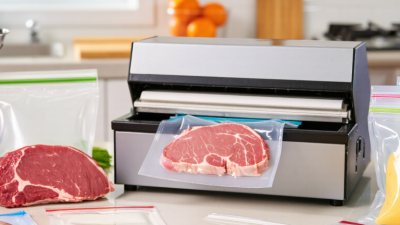
Vacuum freezer bags are flexible, food-contact pouches that remove most air before heat sealing. They commonly use multilayer films, combining strength, low-temperature flexibility, and oxygen or moisture barriers. A home sealer draws air from the bag, then melts its opening into a continuous seam. Less oxygen means less oxidation, freezer burn, and odor transfer. It is not sterilization. USDA FSIS advises keeping freezers at 0°F (-18°C) or below. The bag protects quality, not temperature.

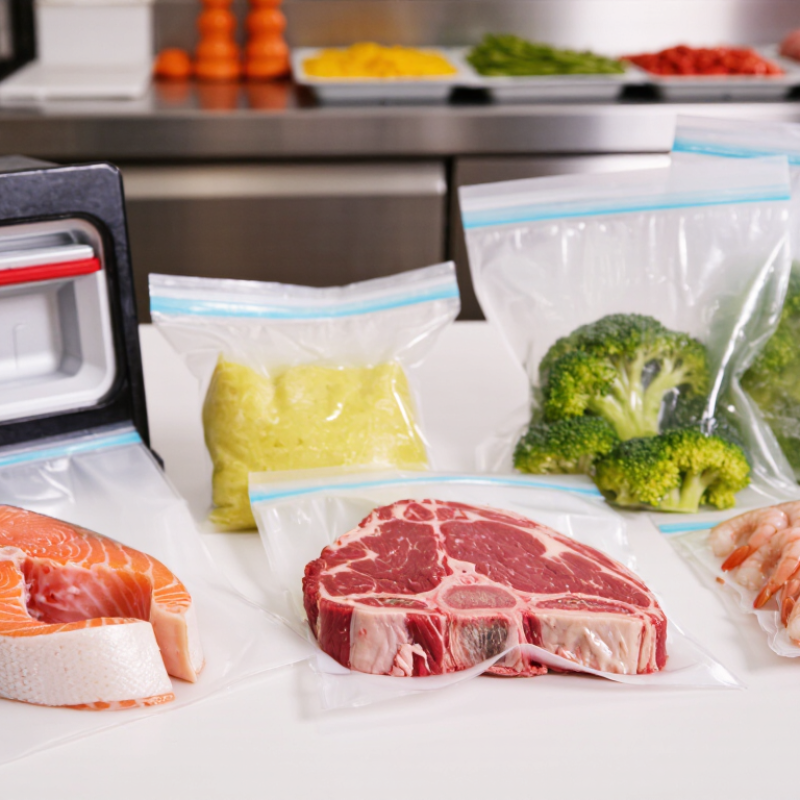
In practical packing tests, I look for a clear seal line, even channels, and enough headspace above the food. Sharp bones need protective wrapping. Otherwise, they may puncture the film during freezing or handling. Flat portions freeze faster than thick blocks. Removing air also reduces surface exposure to ice crystals. Yet “completely air-free” is an imperfect promise. Small leaks, trapped liquid, or weak seams can undermine the result. A 2024 UNEP Food Waste Index Report estimated 1.05 billion tonnes of food waste in 2022. That total covered homes, food service, and retail. Better packaging cannot solve waste alone. It may help extend usable storage with careful inventory.

For bags sourced from China, request food-contact documentation, migration test results, freezer-temperature claims, and seal-strength data. Check whether the stated thickness matches the sample. That step is often neglected. A bag can look robust and still fail at the seam. Use dated portions and inspect seals after freezing.

Which Materials and Features Matter Most in Freezer Bags?

How to Choose the Best Vacuum Freezer Bags from China?

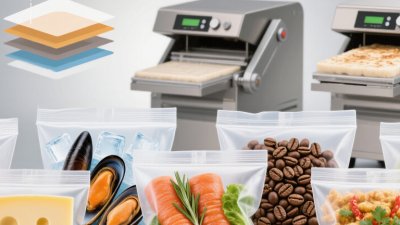
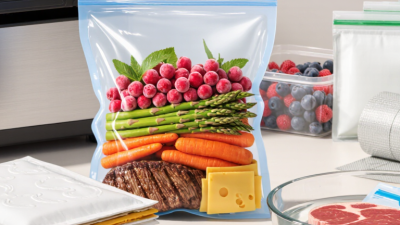
Material selection determines how well a vacuum freezer bag protects food. Most reliable bags use a multilayer structure, often nylon for puncture resistance and polyethylene for sealing. Nylon helps block oxygen, while polyethylene remains flexible at low temperatures. Thin is not always better. A bag that feels soft may tear around sharp bones or frozen edges. For meat, seafood, and prepared meals, choose a thickness suited to the product’s weight and shape.

Seal performance deserves equal attention. Look for wide sealing areas, consistent film thickness, and strong resistance to splitting after freezing. Double seals add security, especially during long storage. Embossed channels can improve air removal in external vacuum machines. Smooth bags may work well with chamber machines, but compatibility must be confirmed before ordering. Practical tests should include vacuum strength, leak checks, freezer exposure, and repeated handling.

Ask Chinese suppliers for material specifications, thickness tolerance, food-contact test reports, and batch inspection records. Test samples with your actual equipment and products. A bag can pass a simple water test yet fail near a sharp shell or bone. That matters. Do not judge quality by clarity or glossy appearance alone. A common purchasing mistake is choosing the lowest price before checking seal reliability. Supplier claims also need verification through independent testing when volumes are large. Test before ordering.

How to Choose the Best Vacuum Freezer Bags from China? - Which Materials and Features Matter Most in Freezer Bags?

Evaluation Category Specification or Material Typical Data or Suitable Range Why It Matters for Freezer Use What to Confirm with the Supplier
Base Material PA/PE multilayer film Recommended Nylon/polyamide layer combined with polyethylene sealing layers PA provides puncture resistance and mechanical strength, while PE provides reliable heat sealing and food-contact compatibility. Ask for the layer structure, total thickness, resin specifications, and food-contact documentation.
Sealing Layer PE, commonly LLDPE or LDPE-based A heat-sealable inner layer designed for vacuum-bag production The sealing layer must remain flexible at low temperatures and create a continuous, leak-resistant seal. Request seal-strength results, recommended sealing temperature, sealing time, and seal-width information.
Barrier Performance Oxygen and moisture barrier Higher barrier is preferred for long-term storage; exact values depend on film structure and thickness Reduced oxygen transmission helps limit oxidation, freezer burn, color change, and loss of food quality. Request tested oxygen transmission rate and water-vapor transmission rate, with test conditions clearly stated.
Film Thickness Overall bag thickness Common commercial ranges are approximately 70–200 micrometers, depending on application Thicker film generally improves puncture resistance and durability, but it may cost more and occupy more storage space. Confirm thickness tolerance, measurement method, and whether the quoted thickness is total film thickness.
Puncture Resistance Resistance to bones, shells, and sharp food edges Higher resistance is needed for meat with bones, seafood, and hard frozen products A puncture can allow air and moisture into the package, reducing the effectiveness of vacuum storage. Ask for puncture or impact test data and request samples containing the actual product type.
Low-Temperature Flexibility Freezer temperature performance The bag should remain flexible and resist cracking at the intended storage temperature, commonly around −18°C Flexible film is less likely to split during freezing, stacking, transport, or handling. Confirm the validated minimum operating temperature and test the bags after freezing and thawing cycles.
Vacuum Compatibility Compatibility with external or chamber vacuum equipment Smooth bags are generally used with chamber machines; embossed or textured bags are commonly used with external suction machines The correct surface structure helps the machine remove air and form a complete seal. Confirm machine compatibility, recommended bag orientation, and whether the bag is smooth, embossed, or textured.
Seal Quality Seal width and seal integrity A wider, uniform seal generally provides better protection against leaks; multiple seals may be used for demanding applications Good seals prevent air re-entry and reduce leakage during freezing, storage, and transportation. Check seal consistency, channel formation, seal-through-contamination performance, and burst-test results.
Food Safety Food-contact compliance Documentation should match the destination market and the intended food-contact conditions Compliance helps demonstrate that the material is suitable for direct contact with food under specified conditions. Request a declaration of compliance, migration-test reports, raw-material information, and traceability records.
Temperature Use Freezing, refrigeration, and optional heating suitability Freezer suitability does not automatically mean the bag is suitable for boiling, microwaving, or cooking Different temperature applications require different film structures, seal designs, and safety validation. Confirm separate temperature limits for freezing, thawing, refrigeration, hot-water use, and microwave use.
Bag Format Pre-cut bags, rolls, pouches, or custom sizes Choose the format according to equipment, product dimensions, and packing volume Correct sizing reduces material waste, improves vacuum efficiency, and helps maintain a practical seal area. Confirm finished dimensions, usable internal dimensions, roll length, tolerances, and corner construction.
Surface and Printing Clear, matte, printed, or custom-printed surface Clear film supports product visibility; printing can provide identification and handling information Surface selection affects presentation, readability, traceability, and production cost. Confirm ink suitability for food packaging, print durability, minimum order quantity, and artwork tolerances.
Odor and Flavor Protection Resistance to odor transfer and flavor migration Multilayer structures generally provide better protection than thin single-layer films Improved barrier performance helps preserve the original aroma and reduces absorption of odors from the freezer. Ask for odor-barrier information and conduct sensory checks with strongly scented foods.
Sustainability Material reduction, recyclability, and responsible packaging design Multilayer bags can be difficult to recycle; reduced-gauge designs may lower material use when performance is maintained Sustainability claims should be evaluated together with barrier, seal, and puncture performance. Request material composition, recyclability guidance for the destination market, and evidence supporting environmental claims.
Quality Control Production consistency and inspection records Important checks include thickness, dimensions, seal strength, appearance, leaks, and vacuum retention Consistent quality reduces leakage, customer complaints, product loss, and packaging-line interruptions. Ask for a quality-control plan, batch records, sampling standards, inspection reports, and retained samples.
Best Choice by Application Recommended material direction Delicate foods: flexible medium-thickness PA/PE
Bone-in meat or seafood: thicker, puncture-resistant PA/PE
Long storage: higher-barrier multilayer structure
High-volume packing: machine-compatible rollstock or chamber-compatible bags
The best bag is determined by product shape, storage period, temperature, equipment, and distribution conditions. Evaluate samples using the actual food product, vacuum machine, freezing duration, transport method, and thawing process.
Note: The ranges and recommendations above are typical industry guidance. The final specification should be confirmed through supplier technical data, food-contact documentation, and practical testing under the intended storage and packaging conditions.

How to Evaluate Chinese Vacuum Freezer Bag Suppliers

Choosing vacuum freezer bags from China starts with evaluating the supplier, not comparing the lowest quotation. In my sourcing experience, reliable factories answer technical questions clearly. They explain film structure, thickness, sealing temperature, and freezer performance. Ask for recent food-contact test reports, production photos, and a traceable sample record. A polished catalog proves little. Samples matter more.

Tips: Send the supplier a written specification. Include dimensions, tolerance, thickness, embossing, bag strength, and expected storage temperature. Request samples from normal production, not specially prepared pieces. Test them with oily food, sharp bones, and repeated freezing and thawing. Check seal integrity after vacuuming. Also compare response speed and correction ability. Mistakes happen. Silence is the warning.

A dependable supplier should provide batch identification, inspection procedures, and clear packaging details. Confirm whether testing is performed by an independent laboratory and whether documents match the actual material. Ask how rejected bags are handled and how changes are approved. I would also review a small trial order before long-term purchasing. This costs more time, but it reveals weak sealing, uneven texture, or late delivery. One limitation remains: remote audits cannot show everything. Keep records, repeat key tests, and avoid decisions based on promises alone.

What Quality Standards and Safety Checks Should You Require?

How to Choose the Best Vacuum Freezer Bags from China?

When sourcing vacuum freezer bags from China, require proof of food-contact safety before discussing price. Ask for evidence. The supplier should provide a current declaration of compliance for your destination market. Request migration testing from an independent laboratory accredited to ISO/IEC 17025. Reports should identify the exact film structure, thickness, production lot, and test conditions. Generic certificates are weak evidence.

Check whether the bag remains flexible at your actual storage temperature, usually around -18°C. A reliable factory should test seal strength, puncture resistance, leakage, and odor after freezing. Ask for samples from several production batches, not just one carefully selected carton. Fill them with water, vacuum-seal them, and inspect the seals after freezing and thawing. Small leaks matter.

Also examine ink adhesion and inner-surface cleanliness. The bag should not transfer color, smell, or oily residue to food.

Factory controls deserve equal attention. Look for documented raw-material traceability, hygienic production procedures, calibrated testing equipment, and corrective-action records. An audited quality system can support reliability, but it cannot replace product testing. I would also request a retained sample policy and clear batch coding. Do not guess. Some suppliers may present impressive paperwork while their film formulation changes quietly. Recheck compliance after material, thickness, or factory changes. My own standard would be simple: approve only what has been tested, recorded, and physically inspected.

How to Compare Prices, Customization, and Shipping Options

How to Choose the Best Vacuum Freezer Bags from China?

Price comparisons should begin with identical specifications. Compare thickness, material layers, bag size, zipper type, printing, and sealing strength. A quote for 1,000 bags may exclude molds, artwork, inspection, or export cartons. Grand View Research estimates the global vacuum packaging market will grow at about 4.6% annually through 2030. Demand is rising, but cheaper materials can increase leakage and freezer burn. Ask suppliers for samples, production tolerances, and test results. One overlooked detail can damage an entire shipment.

Customization also changes the real cost. Custom dimensions reduce empty space, yet they may increase minimum order quantities. Printed bags need color approval and longer production schedules. Request a clear quotation with unit price, tooling cost, sample charge, lead time, and payment terms. The supplier should explain whether quoted prices are EXW, FOB, CIF, or DDP. Freightos market reports show that ocean freight prices can shift sharply during peak periods. A low price may not stay low.

Tips: Request three comparable quotations. Use the same specifications. Confirm carton dimensions before shipping. Ocean freight usually costs less, but air freight reduces waiting time. Check customs documents carefully. Ask for a pre-shipment inspection, especially for large orders. I would not choose the lowest offer automatically; that habit sounds efficient, but it often hides weak quality control. Weak evidence should slow the decision.