Choosing reliable Sous Vide Bags is a practical decision for food manufacturers, restaurant groups, and home-kitchen brands. The right bag must withstand controlled heating, cold storage, sealing pressure, and regular handling. Material structure matters. Seal strength matters more than attractive packaging.
Douglas Baldwin, a sous vide researcher and author of A Practical Guide to Sous Vide Cooking, describes sous vide as “a method of cooking in which food is placed in a plastic pouch or glass jar and cooked in a water bath.” His explanation highlights an essential point: the pouch is part of the cooking system, not merely an outer container. Buyers should therefore examine multilayer construction, oxygen resistance, leak performance, and temperature suitability before comparing prices.
This guide introduces China’s top 10 Sous Vide Bags suppliers for global buyers. It focuses on manufacturing experience, product customization, quality controls, export capability, and communication reliability. Some suppliers may offer impressive samples but inconsistent production batches. That risk deserves attention. A glossy sample proves little without documented testing and stable specifications.
The selection process also considers printing options, thickness ranges, packaging formats, and response speed. Details become visible during real use: a weak corner can leak, while a poor seal can affect food quality. Buyers should request technical datasheets, compliance documents, sample orders, and clear production terms. No supplier is perfect. Careful verification remains necessary, especially when serving large retail or food-service markets. This overview aims to make that evaluation more practical, transparent, and evidence-based.
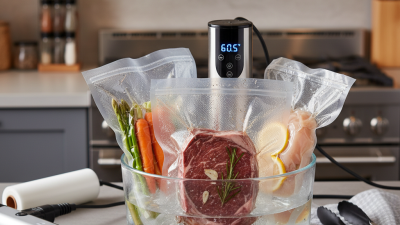
Sous vide bags are food-contact pouches designed for controlled low-temperature cooking and chilled storage. They must tolerate prolonged heat, resist punctures, and maintain a reliable seal around meat, seafood, vegetables, or sauces. Unlike ordinary storage bags, they need tested material performance and traceable production controls.
Global buyers need them because sous vide improves portion consistency and can reduce preparation losses. The UNEP Food Waste Index Report 2024 estimated that 1.05 billion tonnes of food were wasted worldwide in 2022. The FAO also reported that about 14% of food is lost between harvest and retail.
Properly selected bags cannot solve this alone, but they can support tighter portioning, longer chilled holding, and cleaner inventory management.
Seal quality matters. Buyers should request migration testing, temperature data, oxygen-barrier results, and batch traceability. Bag dimensions also affect performance; oversized pouches may trap air and weaken heat transfer.
A thicker bag is not automatically safer. It may increase material use without improving puncture resistance. This is where supplier experience becomes important, especially when factories test real food loads rather than empty pouches.
The FDA Food Code 2022 also emphasizes approved food-contact materials and safe handling controls, which global purchasers should verify against local requirements.
The best specification is still a compromise between barrier performance, seal strength, recyclability, and total cost.
A reliable supplier should provide clear specifications for film structure, thickness, sealing temperature, and recommended cooking ranges. Ask whether the bag is designed for direct food contact and request current test reports from independent laboratories. Check migration results, odor performance, and heat resistance at your intended temperature. Documents matter, but samples matter more.
Order samples from several suppliers and test them with real food, water, and your planned sealing equipment. Inspect the seal after heating, cooling, freezing, and rough handling. Look for leaks, delamination, wrinkles, or unusual smells. A bag that performs well for one machine may fail on another. Small differences can become expensive problems.
Evaluate production control, not only price. Review batch coding, raw material traceability, quality inspection records, and corrective-action procedures. Ask about minimum order quantities, lead times, carton protection, and replacement policies. Video audits can help, although they cannot reveal everything. A polished factory presentation may still hide inconsistent sealing pressure or weak storage practices. Communication is another useful test. Suppliers should answer technical questions directly and explain limitations clearly. Be cautious when every answer sounds perfect. Reliable partners usually admit what requires further testing. Check references carefully, compare evidence, and record each result before making a purchasing decision.
For international buyers, the top 10 China sous vide bag suppliers should be judged by production control, material consistency, and export experience. Reliable suppliers usually offer multilayer PA/PE structures, stable thickness, strong seals, and clear food-contact documentation. These details matter when bags face long heating cycles, vacuum pressure, and cold storage.
A practical sourcing review should include samples from each supplier. Test seal strength, puncture resistance, leakage, and shrinkage after heating. Ask for batch records, factory audit reports, and compliance documents required in your target market. Suppliers with in-house printing and converting may provide better control over custom sizes. However, customization can increase minimum order quantities and extend lead times.
Do not trust polished catalogs alone. Request recent production samples. Check whether the printed surface remains stable after immersion and handling. A supplier may pass a basic vacuum test but fail during repeated temperature changes. That weakness is easy to miss. I would also compare communication speed, complaint handling, and replacement policies. Price deserves attention, but it should not decide everything. Some suppliers provide excellent samples, yet their mass production varies. Buyers should therefore approve a pre-shipment inspection plan and retain reference samples for future comparison.
| Rank | Anonymous Supplier Profile | Main Bag Formats | Typical Material Structure | Typical Thickness | Typical Temperature Range | Barrier Performance | Production Capability | Common Compliance Documents | Typical Export MOQ |
|---|---|---|---|---|---|---|---|---|---|
| 1 | High-volume flexible packaging manufacturer | Flat pouches, stand-up pouches, roll stock | PA/PE, PA/RCPP, or PET/PA/PE multilayer film | 70–150 microns | Approximately -40°C to 121°C, depending on structure | Good puncture resistance and medium-to-high oxygen barrier options | Rotogravure printing, heat sealing, custom sizes | Food-contact declaration, migration test, factory quality records | 50,000–100,000 pieces |
| 2 | Specialist in heat-resistant cooking pouches | Sous vide pouches, boil-in-bag pouches | PA/RCPP or PET/PA/RCPP multilayer film | 80–140 microns | Commonly up to 121°C for validated retort-grade structures | High heat-seal strength and strong resistance to delamination | Custom sealing widths, rounded corners, leak testing | Heat-seal test report, food-contact test, material specification sheet | 30,000–80,000 pieces |
| 3 | Custom printed food-packaging converter | Printed pouches, branded catering packs, retail bags | PET/PA/PE or PET/PA/CPP structures | 75–130 microns | Approximately -20°C to 100°C for standard cooking applications | Medium oxygen barrier; enhanced barrier available with EVOH layers | Multi-color printing, matte or gloss finish, registration control | Ink compliance statement, migration report, print-quality inspection | 50,000–150,000 pieces |
| 4 | Vacuum packaging specialist for food processors | Vacuum pouches, embossed bags, chamber-machine bags | PA/PE coextruded film | 60–120 microns | Approximately -40°C to 90°C for standard sous vide use | Strong vacuum retention and good puncture resistance | Embossed channel options, custom dimensions, automated packing compatibility | Material declaration, seal-strength data, leak-test records | 20,000–60,000 pieces |
| 5 | Small and medium customized pouch producer | Short-run pouches, sample packs, private-label bags | PA/PE or PET/PE laminated film | 70–120 microns | Approximately -20°C to 90°C, subject to validation | Standard barrier suitable for short- to medium-term chilled storage | Flexible artwork support, sampling, low-volume customization | Basic food-contact declaration and sample approval record | 10,000–30,000 pieces |
| 6 | High-barrier packaging supplier | Extended-shelf-life pouches, oxygen-sensitive food packs | PET/PA/EVOH/PE or PET/PA/EVOH/CPP | 80–150 microns | Approximately -20°C to 100°C, depending on sealant layer | Low oxygen transmission with improved aroma and moisture protection | Barrier-film lamination, oxygen transmission testing, custom seals | OTR and WVTR reports, migration test, food-contact declaration | 50,000–100,000 pieces |
| 7 | Eco-focused flexible packaging manufacturer | Reduced-material pouches, recyclable-design prototypes | PE-based mono-material or simplified laminate structures | 70–130 microns | Generally -20°C to 90°C, subject to testing | Moderate barrier; performance depends on mono-material design | Lightweighting, water-based inks, recyclable-design consultation | Material composition statement, recyclability assessment, migration report | 50,000–120,000 pieces |
| 8 | Retail-ready food pouch producer | Shelf-ready pouches, zipper bags, display packs | PET/PA/PE or PET/PE with optional zipper | 80–140 microns | Approximately -20°C to 95°C for validated applications | Good moisture barrier and practical shelf-display durability | Zippers, tear notches, euro holes, custom retail finishes | Food-contact declaration, zipper safety data, seal inspection report | 30,000–80,000 pieces |
| 9 | Industrial contract packaging supplier | Large-format bags, foodservice packs, bulk pouches | Heavy-duty PA/PE or PET/PA/PE laminate | 100–180 microns | Approximately -40°C to 100°C, based on film selection | High mechanical strength for large portions and frozen logistics | Large-size conversion, reinforced seals, palletized export orders | Batch traceability, material specification, seal-strength and leak reports | 30,000–100,000 pieces |
| 10 | Export-oriented flexible packaging factory | Standard sous vide bags, custom pouches, roll film | PA/PE, PET/PA/PE, or PA/CPP multilayer film | 70–150 microns | Approximately -40°C to 100°C for standard sous vide applications | Balanced vacuum retention, clarity, sealability, and puncture resistance | OEM dimensions, export cartons, pre-shipment inspection support | Food-contact declaration, certificate of analysis, packing list and inspection records | 20,000–60,000 pieces |
Choosing among China’s top sous vide bag suppliers requires more than comparing quoted prices. Review the bag structure, thickness, seal strength, and temperature range. A 90-micron bag may suit small portions, while thicker film handles bones or dense frozen food better. Ask for samples. Test them in real cooking conditions, not only on a supplier’s specification sheet.
Food-contact safety deserves careful attention. Request current material declarations, migration test reports, and batch traceability records. Check whether the documents match the exact film and adhesive used in production. Clear printing, stable seals, and low odor also matter. During testing, inspect bags after extended heating, cooling, and freezing. A failed corner can waste an entire preparation cycle. Do not rely on attractive certificates alone.
Customization can include dimensions, valve placement, zipper style, printing, packaging, and carton markings. Confirm artwork tolerances before mass production. Small changes may affect sealing equipment or storage space. Ask about minimum order quantities, sample lead times, and replacement procedures for defective goods. A common sourcing mistake is accepting a perfect sample without checking production consistency. Request several samples from different batches. They may not look identical. That difference deserves investigation before a global shipment is approved. Reliable suppliers should answer technical questions clearly, maintain inspection records, and disclose limitations instead of promising everything.
This typical procurement model prioritizes food-contact safety, seal and leak performance, and thermal reliability. Buyers should verify applicable food-contact documentation, temperature specifications, migration test results, sealing quality, minimum order quantities, printing options, and custom dimensions directly with each supplier. The percentages represent evaluation priorities, not supplier rankings.
Selecting a sous vide bag supplier starts with the food, temperature, and shipping route. A bag for chilled seafood may need different performance from one used for slow-cooked beef. Define these details before comparing factories.
Look for food-contact material declarations, migration test reports, and batch traceability. Ask whether the supplier controls film thickness, sealing strength, and odor after heating. Request samples from regular production, not specially prepared pieces. Test them in real conditions: boiling water, long holding times, freezing, folding, and vacuum pressure. Small failures matter.
A capable supplier should explain production tolerances clearly. They should also provide consistent lead times, carton details, and minimum order quantities. For export markets, check labeling, documentation, and applicable food-packaging requirements with a qualified local adviser. Rules differ between regions.
Price deserves attention, but it should not lead the decision. A cheaper bag may create leakage, waste, or customer complaints. Still, higher pricing does not guarantee better quality. This is where buyers often make mistakes. Compare measurable evidence instead of polished promises.
Communication is another practical test. Send a technical question and observe the response. Does the supplier answer precisely, or avoid difficult details? A reliable partner records changes, accepts reasonable inspections, and reacts quickly when a sample fails. Keep written specifications, because memory becomes unreliable after several production cycles.