How to Choose the Best Food Vacuum Bags for Global Sourcing
Choosing the best Food Vacuum Bag for global sourcing requires more than comparing prices. The bag must protect food from oxygen, moisture, punctures, and temperature changes. It must also perform consistently across long shipping routes, warehouses, and different filling environments.
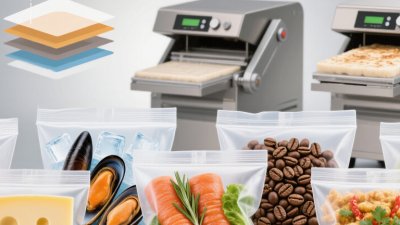
Food-packaging authority Gordon L. Robertson states, “Packaging must protect the product throughout its journey.” This principle remains practical for international buyers. A suitable bag may combine food-grade polyethylene with nylon or EVOH layers. Nylon improves puncture resistance. EVOH strengthens oxygen protection. However, thicker material is not always better. It can increase cost, waste, and shipping weight.
Seal quality matters just as much.
Buyers should request samples, technical data sheets, migration test reports, and certificates of analysis. They should test seal strength after vacuuming oily, sharp-edged, or frozen foods. A bag that performs well on a clean factory line may fail after rough handling. That uncomfortable detail is easy to ignore.
Supplier evaluation also deserves careful attention. Review production equipment, quality-control records, batch traceability, and corrective-action procedures. Ask whether the supplier can maintain stable dimensions and sealing temperatures. Confirm that printed inks and adhesives are suitable for the intended food-contact application.
Global sourcing creates another complication: standards differ between markets. Requirements should be checked with qualified regulatory professionals before purchase. No single Food Vacuum Bag fits every product. The right choice balances barrier performance, machinability, shelf-life goals, compliance, and total landed cost. Some decisions will remain imperfect. Reliable testing reduces the risk of discovering that too late.
Classify Foods by 0–4°C Chilling, −18°C Freezing, and Oxygen Risk
How to Choose the Best Food Vacuum Bags for Global Sourcing
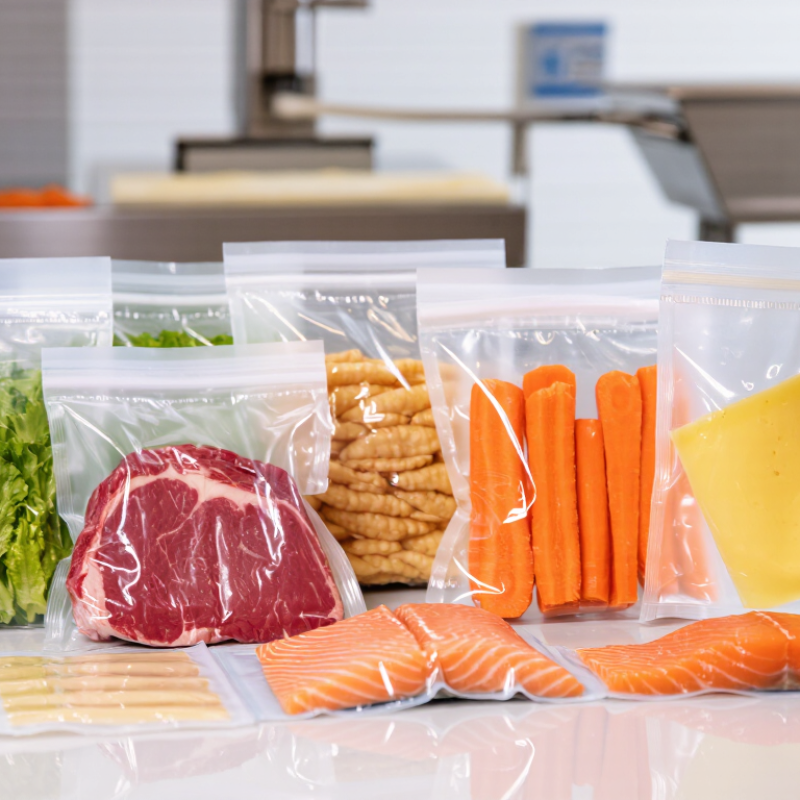
Classify the food before comparing bag prices. At 0–4°C, chilled foods need strong seals and low oxygen transmission. Fresh meat, seafood, and prepared meals can lose quality quickly when air remains inside. The FDA Food Code 2022 requires cold holding at 5°C or below, so a 0–4°C specification gives useful operating space. Vacuum packaging does not replace refrigeration. It only reduces exposure to air and handling.
For −18°C freezing, select bags with flexible film and strong puncture resistance.
Bones, shells, and sharp frozen edges can create tiny leaks. Low-temperature seals should remain stable during loading, transport, and thawing. The USDA recommends maintaining frozen food at 0°F, approximately −18°C. Oxygen risk deserves separate attention. Fatty fish, cooked meats, and low-acid foods may require stricter controls under reduced-oxygen packaging. The FDA identifies this format as a potential control concern for certain pathogens, including Clostridium botulinum. That risk is easy to underestimate.
Tips:
Test seals early. Request oxygen transmission and water-vapor transmission data from suppliers. Check film thickness, seal width, freezer performance, and migration documentation. Use samples from several production lots. FAO reported that about 14% of food is lost between harvest and retail, according to its 2019 food-loss report. Better packaging can reduce waste, but it cannot correct poor temperature control. I would also challenge one common assumption: thicker bags are not always better. They may waste material, increase freight costs, and still fail if the seal design is weak.
Compare PA/PE, EVOH, and PVDC by OTR, WVTR, and 70–200 μm Gauge
How to Choose the Best Food Vacuum Bags for Global Sourcing
Bag selection should begin with OTR and WVTR, not appearance. OTR measures oxygen transmission, while WVTR measures moisture movement. At 70–200 μm, total gauge improves puncture resistance and seal reliability. It does not automatically create a stronger barrier. ASTM F1927 and ISO 15105-1 require controlled test conditions. Use comparable temperature, humidity, and film thickness.
Published technical data reviewed in Food Packaging and Shelf Life during 2023–2024 show broad ranges. Standard PA/PE structures often report OTR near 30–80 cc/m²/day and WVTR around 2–6 g/m²/day. EVOH structures can reach below 1 cc/m²/day under dry conditions. Humidity may sharply reduce performance. PVDC commonly delivers OTR below 1 cc/m²/day and WVTR below 1 g/m²/day, depending on coating weight and lamination quality. These are indicative figures, not purchase guarantees.
For dry foods, EVOH may offer a practical oxygen barrier with suitable moisture protection. For fatty or aroma-sensitive products, PVDC can provide steadier protection. PA/PE remains useful where toughness and vacuum forming matter more than maximum barrier. Ask suppliers for independent test reports, not only brochures. Check 80, 120, and 180 μm samples under the same protocol. A thicker bag may still fail at a weak seal. I would also retest after transport. Heat, humidity, and handling expose assumptions quickly.
Verify Food-Contact Compliance: FDA 21 CFR, EU 1935/2004, and 10 mg/dm²
Choosing food vacuum bags for global sourcing starts with food-contact compliance, not appearance or price. The FDA requires materials to comply with the relevant sections of Title 21 CFR, such as regulations covering plastic polymers, adhesives, and colorants. Ask suppliers for the exact resin composition, intended food type, temperature range, and contact duration. “FDA approved” is too vague. A proper compliance statement should identify the applicable CFR sections and supporting migration data.
For European sales, Regulation (EC) No 1935/2004 requires materials to remain safe, avoid unacceptable composition changes, and prevent taste or odor transfer. Plastic bags may also require compliance with Regulation (EU) No 10/2011 and good manufacturing practice under Regulation (EC) No 2023/2006. The overall migration limit is generally 10 mg/dm². Test results must match real use, including frozen storage, boiling, acidic foods, or fatty products. Different conditions produce different risks.
Do not rely on one certificate.
The European Commission’s 2023 packaging waste proposal highlights the pressure to improve packaging safety, recyclability, and traceability across supply chains. FAO estimates that 14% of food is lost between harvest and retail, making reliable barrier performance commercially important. In practical audits, missing batch numbers and outdated declarations remain common weaknesses. I would request recent third-party migration reports, production-site details, and samples from the actual manufacturing line. A document can look complete and still fail to reflect the bag being shipped.
Test Seals and Leaks with ASTM F88 and ASTM D3078 Before Mass Orders
Choosing food vacuum bags for global sourcing requires more than comparing thickness, price, or printed specifications. Seal performance deserves direct testing before a mass order. ASTM F88/F88M can measure the force required to separate a bag seal. This helps buyers compare seal strength across materials, temperatures, and production lots. Record the seal width, jaw temperature, dwell time, pressure, and opening speed. Without these details, test results may look precise but remain difficult to trust.
ASTM D3078 provides a bubble emission method for detecting gross leaks in flexible packaging. Fill sealed bags with air, place them under water, and watch for continuous bubbles after applying controlled pressure. Small leaks may appear near corners, folds, or uneven seal lines. Test empty bags and vacuum-packed samples because product shape can stress the seal differently. Use samples from several cartons, not only the best-looking pieces.
Keep the test evidence.
A practical sourcing file should include photographs, sample identification, test settings, failures, and corrective actions. One trial may expose seal contamination from oil, powder, or moisture. That detail matters during factory production. A strong laboratory result does not guarantee reliable transport performance. Vibration, stacking, temperature changes, and rough handling can create different failures. Buyers should repeat testing after design changes and agree on acceptance criteria before ordering. I have found that rejecting a few unclear samples early is cheaper than explaining widespread leakage later. Perfect data is unlikely, but transparent records support better decisions.
Selecting Food Vacuum Bags for Global Sourcing
Comparative screening data for four anonymous bag constructions. Seal strength is reported as the average force in N/15 mm using ASTM F88, while leak rate represents specimens that produced bubble emissions during ASTM D3078 testing. Results are an illustrative laboratory screening dataset and should be verified with production samples before mass orders.
Higher ASTM F88 seal strength indicates greater resistance to seal separation. Lower ASTM D3078 leak rates indicate better package integrity. Use both results together when comparing suppliers, materials, and sealing-process consistency.
Set AQL 1.5 Sampling, Lot Traceability, and Incoterm Controls
Choosing food vacuum bags globally requires more than comparing thickness and price. UNEP’s Food Waste Index Report 2024 estimates 1.05 billion tonnes of food were wasted in 2022. Strong barrier performance helps, but weak controls can erase that benefit. Specifications should define film structure, seal strength, puncture resistance, food-contact compliance, and storage limits. Small omissions become expensive.
For incoming inspection, set ISO 2859-1, normal inspection, General Level II, and AQL 1.5 for agreed bag characteristics. AQL is not an acceptable defect percentage. It is a sampling decision rule. The purchase order should state lot size, sample code, acceptance number, rejection number, and defect classification. Check seal channels, pinholes, dimensions, odor, print transfer, and pack count. Keep retained samples from every lot. That step is often skipped.
Lot traceability should connect the supplier, resin lot, film roll, machine, shift, sealing settings, inspection record, carton, pallet, and dispatch date. A scannable lot code helps only when records remain retrievable. FAO’s food loss reporting places global pre-retail food loss near 13 percent, supporting joint reviews of packaging and traceability. Incoterms must identify the named place and version, not merely “CIF.” Assign responsibility for export clearance, freight, insurance, unloading, and risk transfer. Suppliers may pass AQL while traceability remains incomplete. That uncomfortable gap needs corrective action.