Why You Should Consider Using Food Vacuum Bags for Food Storage?
Food preservation is becoming increasingly important in our fast-paced lives. With rising food costs, many are seeking innovative solutions. Food vacuum bags offer a practical approach for storage. As noted by John Anderson, a leading expert in food preservation, "Food vacuum bags help maintain freshness and minimize waste."
Using a Food Vacuum Bag can extend the shelf life of groceries significantly. They create an airtight seal, preventing oxidation and freezer burn. Imagine opening a bag of strawberries a month later, and they still taste fresh. However, it’s crucial to choose the right type of bag for your needs. Not all vacuum bags perform equally, and some may not be safe for all types of food.
Many overlook the potential pitfalls of using food vacuum bags. If not used correctly, food may spoil quickly. There are also concerns about plastic materials used in bags. Not all vacuum bags are BPA-free, and that should be a consideration. Therefore, while Food Vacuum Bags can enhance food storage, it’s vital to reflect on your choices. What works best for your kitchen?

Benefits of Food Vacuum Bags for Extended Food Freshness
Food vacuum bags are an excellent solution for food storage. They help keep food fresh for a longer time. By removing air, they reduce oxidation and freezer burn. Many people overlook how much food they throw away due to spoilage.
It’s frustrating to waste money on spoiled groceries.
Using these bags can extend the life of meat, fruits, and vegetables. Storing these items in vacuum bags creates a moisture barrier. This prevents ice crystals in the freezer, which can affect taste and texture. Imagine biting into a frozen strawberry that still tastes fresh and sweet.
However, not everyone is familiar with the right way to use vacuum bags. Some might rush and not seal them properly. This can lead to air pockets that defeat the purpose. Be mindful of how you pack food. It’s worth taking the time to learn the technique for maximum freshness.
Understanding the Science Behind Vacuum Sealing and Food Preservation
Vacuum sealing is a method that removes air from food storage bags. This process significantly slows down oxidation, which causes food to spoil. By sealing without air, you limit the growth of bacteria and mold. Food can last much longer in vacuum bags compared to regular storage methods. Fresh vegetables, meats, and leftovers benefit the most from this technique. The difference is noticeable; fruits stay vibrant and vegetables retain crunch.
One key aspect of vacuum sealing is its effectiveness with moisture. When food is exposed to air, moisture can lead to freezer burn. This affects both texture and flavor. Vacuum-sealed bags reduce this risk, preserving the food’s original qualities. However, it is important to monitor the sealing process. If the seal isn’t tight, air can leak in. This will compromise the storage life of the food.
Lastly, using vacuum bags means being mindful of the contents. Not all food types behave the same way under vacuum conditions. Some foods, like delicate berries, may get crushed. Others with high liquid content might require special techniques. Understanding these nuances enhances food preservation. Embracing vacuum sealing can be a worthwhile step in your kitchen. However, it demands attention to detail.
Comparative Analysis: Vacuum Sealing vs. Traditional Food Storage Methods
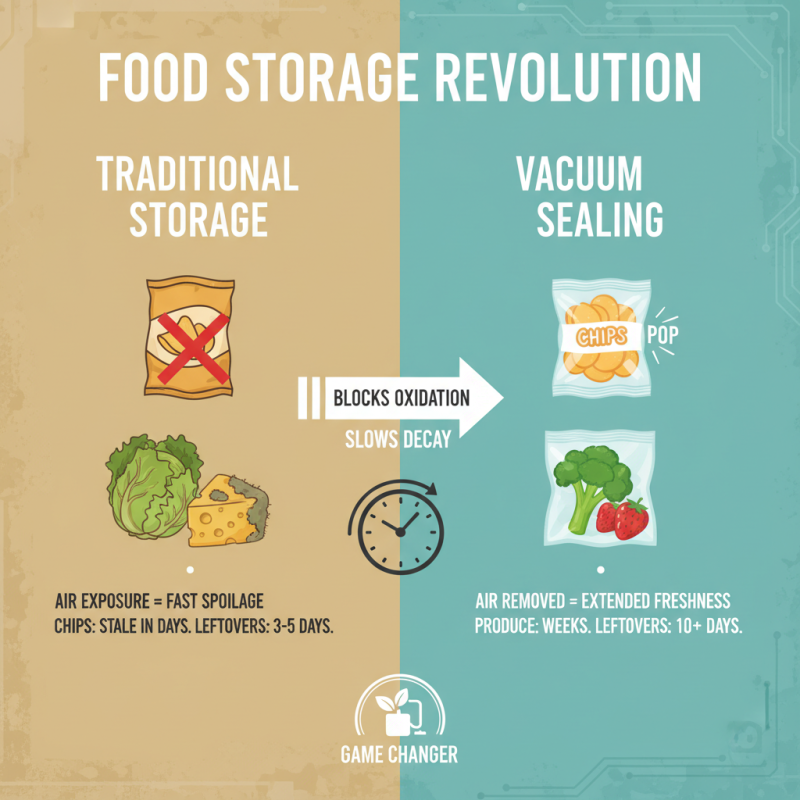
Vacuum sealing has become a game changer in food storage. It extends freshness significantly compared to traditional methods. With regular storage, food can spoil quickly. An opened bag of chips goes stale in days. In contrast, vacuum bags remove air. This process slows down oxidation, preventing spoilage. Fruits and vegetables stay crisp longer. It's amazing how much longer your leftovers can last.
However, vacuum sealing isn't flawless. It requires an initial investment in a vacuum sealer. Not everyone finds it convenient. There’s also the concern about compatibility. Not all foods seal equally well. Moist foods can create issues with sealing. But the benefits often outweigh these downsides. The quality of stored food improves dramatically. You might find you waste less food overall.
Transitioning to vacuum sealing means a shift in your habits. Some people need time to adjust. It may take practice to get it right. Understanding how to package different items is essential. Yet, once mastered, the rewards are clear. You enjoy fresher meals and less food waste. It’s worth considering if you want to elevate your food storage game.
Impact of Vacuum Sealing on Nutrient Retention in Food Items
Vacuum sealing is a powerful method for food storage. It removes air, which helps in retaining nutrients. Studies show that vacuum-sealed foods can retain up to 50% more vitamins compared to traditionally stored items. For instance, leafy greens stored in vacuum bags have longer freshness, maintaining their vitamin C levels for weeks.
The process also minimizes freezer burn. This is important as freezer burn can deteriorate flavor and nutrients. By sealing food properly, you can discourage oxidation. Research has indicated that foods exposed to air often lose significant nutrients over time. Additionally, prolonging the freshness of items like meat and vegetables often results in better meal preparation options.
Though vacuum sealing offers benefits, it is not a cure-all. Some people report that vacuum-sealed foods might lack the same texture after thawing. It's essential to be aware of the trade-offs. Not all food items respond well to vacuum sealing. Items like mushrooms may become slimy. This raises questions about the balance between preservation and food quality.
Why You Should Consider Using Food Vacuum Bags for Food Storage? - Impact of Vacuum Sealing on Nutrient Retention in Food Items
| Food Item |
Nutrient Retention (%) |
Storage Method |
Shelf Life (Months) |
| Spinach |
90% |
Vacuum Sealed |
12 |
| Chicken Breast |
95% |
Vacuum Sealed |
24 |
| Broccoli |
85% |
Vacuum Sealed |
10 |
| Carrots |
90% |
Vacuum Sealed |
12 |
| Steak |
92% |
Vacuum Sealed |
36 |
| Fish |
95% |
Vacuum Sealed |
24 |
Cost-Effectiveness of Using Vacuum Bags in Food Storage Solutions
Using vacuum bags for food storage is increasingly popular, largely due to their cost-effectiveness. These bags help preserve freshness and flavor, reducing the need for frequent grocery runs. When you vacuum seal food, it lasts longer. This means fewer trips to the store and less waste. You save money by making your food last.
The initial investment in vacuum bags may seem high. However, when you think about the savings over time, it becomes clear. Buying in bulk is cheaper, and vacuum bags allow you to portion food effectively. You might have leftovers, but without vacuum bags, they spoil quickly. It's frustrating to throw away spoiled food. With vacuum bags, you eliminate this problem.
Sometimes, people forget about the bags you need after purchasing. Not having the right size can lead to waste. It’s essential to keep an organized storage area. Ensure you know where everything is. Even a simple oversight can result in mismanaged food and resources. So, while vacuum bags save money in the long run, it’s important to use them wisely.