Choosing the right Hoge Barriere Film supplier can affect shelf life, product safety, and packaging efficiency. A reliable supplier should offer more than attractive pricing. They should provide consistent barrier performance, documented quality controls, and practical technical support.
In this guide, we examine five leading Hoge Barriere Film suppliers through measurable criteria. These include oxygen transmission rate, water vapor resistance, sealing performance, thickness consistency, and customization capability. We also consider production capacity, certification records, delivery reliability, and experience with different packaging applications.
Details matter.
A film that performs well in laboratory testing may behave differently on a fast packaging line. Heat, humidity, seal temperature, and handling conditions can change the final result. For that reason, supplier evaluation should include samples, technical data sheets, and real production trials.
Our assessment draws on common packaging engineering practices and supplier verification methods. We focus on evidence rather than broad marketing claims. Company reputation still matters, but it should not replace measurable performance.
No ranking is perfect. Regional availability, material requirements, and budget can change the best choice for each buyer. Some suppliers may excel in pharmaceutical packaging, while others may perform better in food, electronics, or industrial applications.
We also encourage readers to question unclear claims. Ask for recent test reports. Check whether specifications match actual production conditions. A thoughtful comparison can reduce waste, protect sensitive products, and support more dependable purchasing decisions.
What Are the 5 Best High Barrier Film Suppliers?
What Is High Barrier Film and Why Does Supplier Selection Matter?
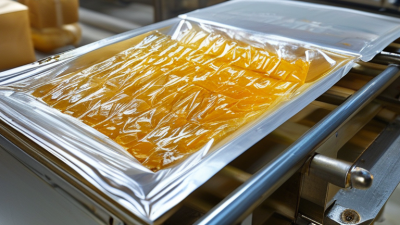
High barrier film protects sensitive products from oxygen, moisture, aroma loss, and light. It commonly combines polyethylene, polyester, EVOH, metallized layers, or aluminum foil. Each layer has a specific job. In practice, barrier performance depends on the full structure, seal design, and packaging process.
Mordor Intelligence estimates the high barrier packaging films market could grow from about USD 18.2 billion in 2024 to USD 23.9 billion by 2029. This growth reflects stricter shelf-life demands and rising flexible packaging use. However, market growth does not guarantee equal supplier quality. A film may show excellent oxygen transmission results in a laboratory, then perform poorly after bending, printing, or heat sealing.
Supplier selection therefore requires measurable evidence. Request oxygen transmission rate, water vapor transmission rate, seal-strength, and migration test data. Ask for results at realistic humidity and temperature conditions. ASTM and ISO methods improve comparison, but they do not remove every risk. A neat datasheet can still hide weak production control.
Supplier audits matter.
Check batch consistency, thickness tolerance, coating adhesion, and traceability. Pilot trials should include transport, storage, and repeated flexing. I would also question unusually low prices. They may indicate thinner layers, unstable coatings, or incomplete testing. The best supplier is not simply the one with the strongest headline barrier. It is the one that delivers stable performance, documented controls, and practical technical support.
Comparative guide based on material capability, barrier performance, converting options, compliance support, and application suitability. Supplier profiles are anonymized; performance values are representative technical ranges for commonly available high-barrier film constructions.
| Supplier Profile | Primary High-Barrier Structures | Typical Oxygen Transmission Rate (OTR) |
Typical Water Vapor Transmission Rate (WVTR) |
Common Thickness Range | Key Processing Capabilities | Typical Applications | Compliance and Quality Support | Overall Fit |
|---|---|---|---|---|---|---|---|---|
| Supplier Profile A |
Metallized polyester laminates; aluminum-foil laminates; PE sealant layers |
Approximately 0.01–1.0 cm³/m²/day |
Approximately 0.01–0.5 g/m²/day |
Approximately 50–180 micrometres |
Custom lamination, roll slitting, surface treatment, and heat-seal optimization | Coffee, snacks, powdered foods, pet food, and moisture-sensitive products | Food-contact documentation, lot traceability, migration information, and quality inspection records |
★★★★★ Best for maximum barrier protection |
| Supplier Profile B |
EVOH-based multilayer films; PE or PP sealant layers; tie-layer coextrusions |
Approximately 0.1–2.0 cm³/m²/day |
Approximately 0.5–3.0 g/m²/day |
Approximately 60–200 micrometres |
Coextrusion, thermoforming grades, sealant customization, and controlled-gauge production | Fresh meat, cheese, ready meals, medical packs, and vacuum packaging | Food-contact declarations, HACCP-based controls, dimensional testing, and seal-strength testing |
★★★★★ Best for thermoformable packaging |
| Supplier Profile C |
Transparent oxide-coated polyester; coated polypropylene; recyclable mono-material structures |
Approximately 0.05–1.5 cm³/m²/day |
Approximately 0.05–1.5 g/m²/day |
Approximately 12–150 micrometres |
Transparent barrier coating, flexographic print compatibility, lamination, and lightweight downgauging | Bakery products, dry foods, confectionery, personal care, and recyclable packaging formats | Barrier-coating specifications, recycling-compatibility information, print testing, and COA documentation |
★★★★☆ Best for clear and lightweight packaging |
| Supplier Profile D |
Aluminum-coated PET or BOPP; high-barrier adhesive laminates; PE and CPP sealant films |
Approximately 0.01–0.8 cm³/m²/day |
Approximately 0.01–0.8 g/m²/day |
Approximately 40–170 micrometres |
Metallizing, adhesive lamination, reverse printing support, pouch making, and custom roll widths | Retort pouches, spices, dehydrated foods, pharmaceutical sachets, and industrial products | Retort and seal testing, ink and adhesive compatibility checks, batch traceability, and inspection reports |
★★★★☆ Best for flexible pouches and sachets |
| Supplier Profile E |
Coated PET and nylon films; PA/EVOH multilayers; high-performance flexible laminates |
Approximately 0.02–2.0 cm³/m²/day |
Approximately 0.1–2.0 g/m²/day |
Approximately 50–220 micrometres |
High-clarity film production, puncture-resistant structures, custom lamination, and small-batch development | Meat and seafood, medical devices, high-value foods, and products requiring strong puncture resistance | Food or medical-grade documentation where applicable, tensile testing, puncture testing, and sample validation |
★★★★☆ Best for demanding mechanical performance |

How to Evaluate High Barrier Film Suppliers
Choosing a high barrier film supplier requires more than comparing thickness and price. The supplier should provide oxygen transmission rate (OTR), water vapor transmission rate (WVTR), seal strength, and puncture data. Ask which test methods were used, such as ASTM D3985 and ASTM F1249. Results without test conditions are difficult to trust.
Packaging performance must match the product. According to the FAO’s 2019 report, about 14% of food is lost between harvest and retail. Proper oxygen and moisture control can reduce avoidable deterioration, but film alone cannot solve poor filling or storage practices. A reliable supplier should offer samples, pilot trials, batch certificates, and traceability records. Check whether reported barrier values remain stable after printing, forming, and heat sealing. A glossy sample can mislead.
The UNEP Food Waste Index 2024 reported 1.05 billion tonnes of food waste in 2022. This strengthens the case for better shelf-life design, while also raising sustainability concerns. Ask suppliers about downgauging, recyclable structures, and actual end-of-life options. “Recyclable” claims need local infrastructure and evidence.
Tips: Request three production lots, not one sample. Compare OTR and WVTR at identical humidity and temperature. Review delivery history, complaint response time, minimum order quantities, and technical support. Do not ignore weaknesses. A supplier with excellent laboratory data may still fail during high-speed packing.
Use a weighted assessment model to compare suppliers without relying on brand or company identity. The criteria reflect practical purchasing priorities for high-barrier flexible packaging.
Recommended evaluation weights: barrier performance includes oxygen and moisture transmission results tested under recognized methods such as ASTM D3985 and ASTM F1249; compliance covers food-contact, quality, and traceability requirements; consistency, converting capability, and delivery reliability address production risk.
Choosing the five best high barrier film suppliers requires more than comparing price per kilogram. Barrier performance depends on oxygen transmission rate, water vapor transmission rate, seal strength, and converting consistency. Smithers’ flexible packaging outlook reports that demand continues to shift toward lighter structures with stronger protection. That makes laboratory data essential, not optional.
The strongest supplier profiles usually include a multilayer coextrusion specialist, a metallized film producer, a transparent coated-film converter, a cleanroom-grade supplier, and a recyclable mono-material developer. A reliable supplier should provide oxygen and moisture test results under defined humidity and temperature conditions. ASTM and ISO test methods add credibility. Grand View Research estimates steady growth in the global flexible packaging market through 2030, with food and pharmaceutical protection remaining major drivers.
Look for production experience, technical response time, and documented batch control. A supplier with pilot-scale sampling can reveal curling, weak seals, or coating cracks before full production. That small trial matters.
Sustainability claims deserve careful review, too. A recyclable structure may lose barrier performance after repeated processing, according to findings discussed in recent CEFLEX and Smithers packaging studies. I would not select a supplier from a brochure alone. Actual test rolls, migration documentation, and customer references provide stronger evidence. Even then, performance can vary between production lots, so ongoing verification remains necessary.
Choosing among the five best high barrier film suppliers requires more than comparing prices. In production trials, I examine oxygen transmission rate, water vapor transmission rate, seal strength, and puncture resistance. These figures show how well a film protects sensitive products during storage and transport. Details matter. A reliable supplier should provide recent test reports, clear specifications, and traceable batch information. Vague data creates avoidable risk.
Quality also depends on processing consistency. A strong supplier controls thickness variation, coating uniformity, surface treatment, and roll cleanliness. Small defects can cause weak seals or pinholes on fast packaging lines. I prefer suppliers that support pilot runs and investigate failures with documented corrective actions. Their technical teams should understand forming temperatures, sealing windows, and equipment limitations. That support saves time. It also reveals whether laboratory claims match factory performance.
Service separates capable suppliers from merely available ones. Leading companies communicate realistic lead times, maintain stable inventory, and respond quickly when specifications change. They should offer samples without excessive delays and explain differences between standard and customized structures. However, service is not always perfect. Some suppliers answer quickly but provide shallow technical details, while others offer excellent engineering support with slower communication. This trade-off deserves scrutiny. Buyers should review complaint records, replacement policies, change-control procedures, and delivery performance over several orders. A supplier that admits limitations may prove more dependable than one promising everything. Audits, production trials, and independent testing remain useful before approving long-term supply.
Choosing among the five best high barrier film suppliers should begin with your application, not a ranking. Barrier film is not one universal solution. For coffee, oxygen transmission rate (OTR) and aroma retention may matter most. For frozen food, puncture resistance and low-temperature sealing can matter more. Retort packs demand heat stability. Smithers’ 2024 flexible packaging analysis forecasts roughly 4% annual market growth through 2028, reflecting sustained demand for lightweight protection. That growth also increases the risk of choosing by price alone.
Ask each supplier for measured OTR and water vapor transmission rate (WVTR), with temperature and humidity conditions clearly stated. Numbers without test conditions are weak evidence. Request seal-strength curves, coefficient of friction data, migration documentation, and pilot-roll results. ASTM F1927 and ASTM F1249 support oxygen and moisture testing, while ISO 11607 helps evaluate sterile barrier packaging. Not every film needs the lowest permeability. Overengineering can raise cost and complicate recycling. A 2024 MarketsandMarkets report projects the barrier films market to expand at over 5% CAGR through 2029. Use that trend carefully.
The best supplier should translate those measurements into your filling line. Check web width, roll diameter, lead time, minimum order quantity, and technical response time. Request a trial using your real product, not water alone. Water hides weak seals. An experienced converter should explain pinholes, curl, delamination, and seal contamination. Still, supplier claims need independent validation. Run accelerated shelf-life testing and compare actual packs after transport. That extra step feels slow. It often prevents an expensive, disappointing launch.